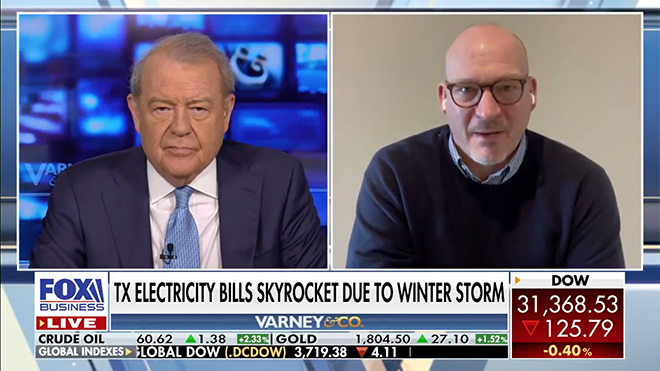
Joe Mastrangelo, Chief Executive Officer of Eos Energy Enterprises, talks about President Biden’s infrastructure bill, battery research, and renewables.
Eos CEO Joe Mastrangelo on Bloomberg Radio
Categories : News

Categories : News
Joe Mastrangelo, Chief Executive Officer of Eos Energy Enterprises, talks about President Biden’s infrastructure bill, battery research, and renewables.
Categories : News
Big batteries have arrived in Pennsylvania — if not in physical form yet, then in the growing number of efforts to bring them here.
In late September, the state Department of Environmental Protection virtually assembled representatives from 85 companies and organizations for its first ever meeting of the Pennsylvania Energy Storage Consortium. Holding the forum was one of the recommendations in a report commissioned by the DEP on how to determine if energy storage can be used to solve environmental issues and bolster grid reliability.
Even without the gathering, the pipeline of projects seeking to put large-scale energy storage on the grid in Pennsylvania — and across the nation — is robust.
The U.S. Energy Information Administration wrote in August that over the next dozen years, 10 gigawatts of new utility-scale battery storage will be added to the grid. That’s 10 times what was on the ground in 2019.
“We expect the relationship between solar energy and battery storage to change in the United States over the next three years because most planned upcoming projects will be co-located with generation, in particular with solar facilities,” EIA analysts wrote.
Look no further than Brunot Island on the Ohio River for a case in point.
A developer has proposed installing a 20-megawatt solar array and a 40-MW battery storage facility near GenOn’s natural gas power plant there. For comparison, there are only 50 megawatts Pennsylvania storage on the grid today.
LS Power, a New York-based investor and operator, has put hundreds of megawatts of storage in the PJM Interconnection queue — a first step for developers to figure out how their projects would fit into the grid used to power homes and businesses. It is behind a 290 megawatt storage facility proposal in Elk County, according to data from the New York grid operator.
PJM’s queue doesn’t name the developers proposing projects, so it’s not clear who is proposing to put storage assets at the various natural gas power plants that LS Power has accumulated in Pennsylvania over the past several years, including in Springdale, Allegheny County; Shelocta, in Armstrong County; and Gans at Fayette. LS Power did not return calls from the Post-Gazette.
The company already operates what is considered to be the largest battery installation in the U.S. in California, a 250-megawatt facility that became operational in August 2020. It plans to build a 316-megawatt battery storage facility at one of its natural gas power plants in Queens.
Supply chain
Energy storage is an umbrella term that includes anything from pumped hydro to the batteries in your car. It can be fast discharge or slow, long duration or short, thermal, electrical, chemical, physical — you name it.
One participant in the DEP consortium suggested that repurposing abandoned oil wells for geothermal development could fit under the umbrella, although much of the discussion was about large batteries — the kind that could be invented, manufactured or installed in Pennsylvania.
With supply chain issues top of mind, the argument was made that as the energy storage industry grows, Pennsylvania would make fertile soil for its seeds and its flowers.
Some of it is already here.
Pittsburgh-based coatings giant PPG sells a thermal coating for automotive batteries and is researching a manufacturing process for electrodes for lithium ion batteries. Eaton Corp. builds electrical components. Mitsubishi Electric Power Products Inc, in Warrendale, makes large energy storage systems.
Form Energy, a Massachusetts-based battery company co-founded by Aquion Energy alumnus Ted Wiley, is setting up a facility in Eighty Four.
It has developed an iron air battery capable of storing days worth of energy. One of its investors is the steel giant ArcelorMittal, which will produce the iron.
As happened with solar and wind, and oil and gas before, and coal before that, battery advocates are leaning heavily on the idea of energy independence underpinned by an American manufacturing base.
All but one of the suppliers to EOS Energy Enterprises’ zinc battery factory in Turtle Creek are within a three-hour drive, CEO Joe Mastrangelo boasted during a virtual panel on energy storage last week.
“This is critical for us,” he said, linking both the reliability of the supply chain and the grid to national security.
EOS, which now has 108 workers churning out batteries from a space inside the former Westinghouse campus and 32 open positions, will need a few hundred more at full capacity, Mr. Mastrangelo said.
“Having incentives to buy in America will help,” he said.
For now, one of the biggest incentives to ramp up energy storage is in the contentious federal budget bill. It’s a 10-year investment tax credit for stand-alone storage projects that covers 30% of the cost of the project.
Similar tax credits have been used to ramp up wind and solar development. State quotas for utilities to buy a certain portion of their generation from solar and other alternative energy fuels also moved the needle, and the DEP-assembled stakeholders asked that a similar mechanism should be considered for energy storage.
Many things to many people
Storage can function like energy generation, akin to a power plant, or as energy regulation, smoothing out the frequency delivered to electric equipment. It can fill in gaps left by renewable power sources or be used in price arbitrage — charging up on cheap power at off peak hours and discharging during the peak.
It’s a concept that wears many hats and, therefore, has attracted the attention of many regulators.
The Pennsylvania Public Utility Commission — which regulates how rates are set for utility customers — took up the issue of utility energy storage last year when it posed a series of “how” questions and invited comments.
The PUC wanted to know whether storage belongs in the distribution architecture of a regulated utility and, if so, who should pay for it and how.
The comment period has been extended several times now and is scheduled to end on Nov. 29.
Valley Forge-based PJM Interconnection, the nonprofit grid operator for 13 states, including Pennsylvania, recently wrestled with how to categorize energy storage in the transmission system.
The DEP consortium agreed that all these agencies need to be brought in on whatever strategy Pennsylvania settles on to give energy storage a jolt here. The group’s next meeting is on Dec. 7.
Categories : News
Storage is one of the challenges in the energy transition. Balki Iyer, chief commercial officer of Eos Energy Storage, tells us how Eos’s zinc batteries are “work horses” that are fully recyclable and provide energy storage in any climate.
Zinc oxide batteries have been powering our lives for years. However, anyone who has ever tried to re-charge them knows that it doesn’t work for long.
As we discussed in Episode 56, zinc batteries will form spiky microscopic dendrites, which will eventually puncture the membrane, touch the cathode and short out the cell.
Eos, an Edison, NJ-based battery developer, has invented a solution to keep these spikes at bay. Whereas my previous guest had demonstrated a “zinc sponge,” Eos describes a multi-stage approach, based on:
Joe Mastrangelo, CEO at Eos, says their technology has an advantage over market-dominant Lithium-ion batteries on two fronts, duration and materials. Whereas lithium-ion batteries can have supply chains wrapping around the world, Joe says Eos set out to base their design on five, “earth abundant, conflict-free” materials—Titanium, Graphitized felt, Zinc, Bromine, and Plastic. They also found suppliers for these materials who serve industries outside the energy sector.
“We’re a very insignificant portion of the overall use of those raw materials when you look at the other applications where those materials are used,” he says.
Regarding duration, Joe says Eos’ batteries were specifically designed for long-term, stationary storage.
“When you start looking beyond six hours, you see some of the weaknesses in the lithium systems,” he says. “There are companies like us developing technologies that can go beyond four hours.”
I asked about customer hesitancy to switch from lithium-ion batteries with the technology already so entrenched in the industry. Joe says the duration advantage has been a strong selling point. For large customers, he says they’ve worked to be “agnostic to the energy management system that our customers use.”
He adds, “As a new entrant to the market, you’re not going to be able to walk into a large utility and say, ‘We have to re-train your workforce.’”
It’s Eos’ smaller customers where most of their growth has been to date. Joe adds that these customers also prefer a more turnkey solution than larger customers like utilities. He believes Eos’ inherent advantages will eventually win over that market as well.
“What I knew from my prior career [at GE] was that this was one of these generational secular shifts in the industry that if you can bring the right product to market, you can capture a large demand curve,” he says. “We are truly pioneering something here.”
Categories : News
The U.S. is on the cusp of a clean energy renaissance, but only if we walk the walk and limit our reliance on foreign supply chains. It’s possible. As a nation of inventors, entrepreneurs, builders and creators, we’ve always been nimble and scrappy enough to switch gears, hit a roadblock or two along the way, clear the path and persevere.
After spending nearly 30 years in the energy industry, and experiencing years of limiting political and market incentives, we have arrived at a moment that is different from any other period in our industry’s recent history. Renewable energy jobs surpassed 11.5 million in 2020.
In the U.S. alone, nearly 1 million people are employed in the renewable energy sector, almost five times more than fossil fuels. Wind service technician is the fastest growing occupation in the U.S. and solar installer is the third fastest growing according to the U.S. Board of Labor Statistics.
Cost is no longer an impediment to progress. The levelized cost of energy, or LCOE, for solar and wind projects are at historic lows and the cost of energy storage systems, which harness this energy and prevent it from being wasted, have plummeted 85% in the last decade and are projected to drop an additional 54% over the next decade.
China has long dominated the solar market, but without energy storage technologies, or simply batteries, renewable energy alone can’t provide the assurances that companies and communities need to feel safe and secure in their electric power supply. Batteries provide a modular, scalable, regional solution that can support the electric grid in the event of an outage, whether caused by extreme weather or a simple maintenance issue.
Recent outages, such as the aftermath of the winter storm in Texas or last summer’s California wildfires, have shown that we’re just one unexpected event away from the reality of a potentially catastrophic grid failure.
As renewables become an increasingly vital part of our complex energy infrastructure, intermittency, or fluctuations between surplus and scarcity of supply, must be managed. Excess production when demand is low, known as curtailment, can be captured and stored to increase the use of renewable energy sources.
In April 2020, California had 15 GW of curtailments, or unusable energy, in a single day—greater than all the energy storage capacity installed globally in 2020. And yet, there was still a scarcity of power when the state experienced 20 days of rolling blackouts last summer. Long duration discharge storage is a critical building block for a more sustainable energy system.
America has the ability to corner the 4-12-hour long-duration energy storage market on a global scale, but only if we have the will to embark on a manufacturing boom that we haven’t seen since the Model T. Investment in our domestic supply chain could alter the course of our economy and usher in a new and long overdue era of “made in America” leadership.
Today, 87% of these batteries are manufactured outside of the U.S. with China alone estimated to account for nearly three-quarters of global production as of the end of 2020. Further, over 95% of batteries deployed for stationary storage in the U.S. today are made from lithium-ion, which can only be sourced from a few countries including China and Korea.
Lithium has its place given its effectiveness at producing short bursts of energy, like those required in electric vehicles, but long duration storage made from safe and sustainable materials will be instrumental to unlocking the clean energy future that America should be marching toward.
At Eos, we’ve been doing this for years, from bringing resilience to the California power grid during last summer’s wildfires to supplying power to remote communities in Nigeria. Our batteries are powered by zinc, a widely available and conflict-free commodity. From there, we take a less-is-more approach—our product is non-flammable, non-toxic, fully recyclable after its life, and efficient in that it can operate in a wide voltage and temperature range.
As President Biden and Congress consider an infrastructure package and dig into U.S. competitiveness, we need to focus on investing in infrastructure and innovation here at home so that we’re better prepared for the next crisis, whatever it may be. We need policies in place to create a level playing field to compete, including a standalone energy storage investment tax credit and the removal of barriers to interconnection and market participation.
The good news is that we’re on the cusp of what could be a rebirth of American manufacturing and innovation in energy resilience as corporations race to reduce emissions and meet climate change goals. The number of companies that set targets and report progress increased nearly 300% from 2019 to 2020 and this figure is likely to grow with the U.S. and other countries setting aggressive targets for carbon mitigation.
I’m proud to say that Eos is leading the way. What if we took an underutilized factory in Pittsburgh and turned it into a modern-day manufacturing facility? We’ve done it. What if we trained Americans who were out of work and placed them into high paying clean jobs? We’ve done it—growing from 50 to 200 employees in just six months. What if every facet of our energy supply chain was sourced with components from the U.S. so that we would never encounter supply shortages? We’ve done it—from our Edison, New Jersey, headquarters to our Voltage Valley suppliers.
We’ve already created 200 jobs in the U.S. and with the right environment to grow, we’ll create more. Let’s supercharge our domestic supply chain and use American ingenuity to source it, manufacture it and scale it now. Energy storage is a critical tool to develop the grid of the future. If we don’t invest in this future today, it won’t be there when we need it the most.
Joe Mastrangelo is the CEO of Eos Energy Enterprises, a provider of zinc-powered clean energy storage systems.
Categories : News
EDISON, N.J.—Eos Energy Enterprises, Inc. (NASDAQ: EOSE) (“Eos”), a leading provider of safe, scalable, efficient, and sustainable zinc-based energy storage systems, today announced booked orders from key customers, including Hecate Energy, Azure Power and ZGlobal Inc., to meet increased demand for energy storage in critical markets such as Texas, California and India.
The Hecate project in Texas is the first booked order as part of the broad-ranging agreement to provide over 1 GWh of energy storage projects to Hecate Energy (“Hecate”), which Eos announced in November 2020. Hecate is a leading global developer, owner and operator of solar, natural gas, wind, and energy-storage projects, with 2.1 GW contracted and a pipeline of 12+ GW. Given recent grid challenges in Texas resulting from winter storms, energy storage is more important than ever to ensure a reliable, resilient grid. Eos clean energy solutions provide value to grid operations by integrating renewable electricity and providing this much needed grid support. This project, and the broader arrangement with Hecate, are aimed to address this specific need in many utilities across Texas.
The Azure project is part of a large solar development in India where Eos energy storage solutions will be installed to provide solar shifting. Azure Power (NYSE: AZRE) is a leading independent solar power producer with a pan-India portfolio of 6.9 GWh as of February 28, 2021. India’s renewable market has seen dramatic growth over the past few years, and storage is starting its upswing, particularly as independent power producers (“IPPs”), such as Azure Power, commit to using only renewable-generated electricity in the nation’s Round-the-Clock Auctions. Eos’s success in India is driven by its earlier deployment of energy storage systems with a leading IPP to support solar shifting in this critical market, which demonstrated the safety and resilience of Eos’s technology in harsh environments, including temperatures as high as 45°C.
The ZGlobal project in California is paired with a solar project and represents a new long-term relationship for the Company. ZGlobal Inc. is a power engineering consultancy firm staffed by veterans of the California Independent System Operator (“CAISO”) and various California utilities.
“Texas and California represent key areas of growth for Eos in the U.S., while India presents great potential for our global expansion plans. We are pleased to secure orders from marquee customers in all of these markets, which we believe validates Eos’s technology solution with top tier mainstream customers to address long duration use cases such as renewable shifting,” said Balki Iyer, Chief Commercial Officer of Eos. “We continue to see strong sales momentum as the benefits of our technology, including the low cost of ownership, minimal carbon footprint and resilient supply chain, continue to resonate in the market as customers recognize that storage is crucial to saving energy and redefining the grid. With this announcement, Eos’s orders backlog has grown to approximately $30 million, which includes more than 20 orders totaling approximately 107 MWh over the past six months. In addition, the Company strengthened its pipeline to more than $3.5 billion with expected delivery over the next four years.”
The Eos Znyth® technology can be used for front-of-meter grid installations and behind-the-meter industrial applications, among other use cases. The zinc-powered batteries can be deployed as both standalone storage and paired with renewables on the electric grid, in addition to being used in commercial & industrial facilities.
About Eos
Eos Energy Enterprises, Inc. is accelerating the shift to clean energy with positively ingenious solutions that transform how the world stores power. Our breakthrough Znyth® aqueous zinc battery was designed to overcome the limitations of conventional lithium-ion technology. Safe, scalable, efficient, sustainable — and manufactured in the U.S. — it’s the core of our innovative systems that today provide utility, industrial, and commercial customers with a proven, reliable energy storage alternative. Eos was founded in 2008 and is headquartered in Edison, New Jersey. For more information about Eos (NASDAQ: EOSE), visit eose.com.
Forward-Looking Statements
This press release includes certain statements that may constitute “forward-looking statements” for purposes of the federal securities laws. Forward-looking statements include, but are not limited to, statements that refer to projections, forecasts or other characterizations of future events or circumstances, including any underlying assumptions. The words “anticipate,” “believe,” “continue,” “could,” “estimate,” “expect,” “intends,” “may,” “might,” “plan,” “possible,” “potential,” “predict,” “project,” “should,” “would” and similar expressions may identify forward-looking statements, but the absence of these words does not mean that a statement is not forward-looking. Forward-looking statements may include, for example, statements about: the future financial performance of Eos; Eos’s plans for expansion and acquisitions; and changes in Eos’s strategy, future operations, financial position, estimated revenues, and losses, projected costs, prospects, plans and objectives of management. These forward-looking statements are based on information available as of the date of this press release, and current expectations, forecasts and assumptions, and involve a number of judgments, risks and uncertainties. Accordingly, forward-looking statements should not be relied upon as representing the parties’ views as of any subsequent date, and Eos does not undertake any obligation to update forward-looking statements to reflect events or circumstances after the date they were made, whether as a result of new information, future events or otherwise, except as may be required under applicable securities laws. You should not place undue reliance on these forward-looking statements. As a result of a number of known and unknown risks and uncertainties, actual results or performance may be materially different from those expressed or implied by these forward-looking statements. Some factors that could cause actual results to differ include, but are not limited to: (1) the outcome of any legal proceedings that may be instituted against Eos; (2) the ability to maintain the listing of Eos’s shares of common stock on NASDAQ; (3) the ability of Eos’s business to grow and manage growth profitably, maintain relationships with customers and suppliers and retain its management and key employees; (4) changes in applicable laws or regulations; (5) the possibility that Eos may be adversely affected by other economic, business, and/or competitive factors; and (6) other risks and uncertainties indicated from time to time in the Prospectus included as part of the Registration Statement on Form S-1/A filed by Eos with the Securities and Exchange Commission (“SEC”) on January 13, 2021, Registration No.333-251243, including those under the heading “Risk Factors” therein, and other factors identified in Eos’s prior and future SEC filings with the SEC, available at www.sec.gov.
Contacts Investors: Ed Yuen, ir@eose.com
Media: James McCusker, media@eose.com
Categories : News
Turtle Creek operation hopes riding the hot trends will generate hundreds of jobs
EOS Energy Enterprises is riding several hot trends as the company looks to boost the profile of its zinc batteries.
One is that the batteries are made in America — more specifically, in Turtle Creek in a space once occupied by Westinghouse Electric Co.
Another is that the batteries being churned out at the Pittsburgh-area facility are made from easy-to-source materials, won’t catch on fire and can be fully recycled. That is meant to set them apart from the yet-undefeated champion of energy storage, the lithium-ion battery, which has conquered the market for both stationary and electric vehicle applications.
And here’s a third: the New Jersey-based EOS went public in November when it was acquired by a special purpose acquisition company — a blank-check vehicle for raising money from investors with the goal of eventually acquiring assets. SPACs are hot tickets in this market.
Last year, nearly 250 such companies went public, including Pittsburgh-based Rice Acquisition Corp., run by Rice Energy Inc. alumni. So far this year, the count is at 80, according to SPACinsider.com.
EOS’s deal with the special purpose acquisition company “took the pressure off,” CEO Joe Mastrangelo said.
The deal freed EOS of its debt, recapitalized the company as it was ramping up commercial manufacturing and allowed it to present its business forecast to the public, he said. EOS’s investor materials state it has $16 million in booked orders and $3.6 billion in the pipeline.
Launch, pause, relaunch
The Pittsburgh manufacturing facility currently has 50 employees, but Mr. Mastrangelo is hoping that, as the company adds more production lines, he will need up to 350 workers over the next 12 to 18 months.
This isn’t a case of a startup rushing into large-scale manufacturing (a move many critics suggested felled Pittsburgh battery-tech darling Aquion Energy Inc., which filed for bankruptcy and was sold to a Chinese company in 2017.)
EOS has actually been around since 2008.
Categories : News
EDISON, N.J.— Eos Energy Enterprises, Inc. (NASDAQ: EOSE) (“Eos”), a leading provider of safe, scalable, efficient, and sustainable zinc-based energy storage systems, today announced strong sales momentum over the past 90 days towards meeting its 2021 growth objectives.
As of December 31, 2020, Eos logged $16 million of booked orders. Additionally, the company secured firm commitments supported by customer technical sections and letters of intent for an additional $550 million with expected delivery over the next three years. Eos entered binding agreements with a variety of top energy companies, including utilities and microgrid developers, to provide long-duration energy storage for multiple customer use cases. Nearly 20% of these agreements are for extended partnerships, with the longest spanning up to 20 years.
“The market’s response to our technology has been astounding,” said Joe Mastrangelo, CEO of Eos. “We have shown that the safety, reliability and sustainability of our product is resonating with customers across multiple market segments and use cases. The opportunity we have in front of us is extremely promising.”
The Eos Znyth® technology can be used for front-of-meter grid installations and behind-the-meter industrial applications, among other use cases. Over the summer, an Eos installation proved its effectiveness in extreme conditions when called upon to address grid stabilization issues during California’s rolling blackouts. Earlier this month, Eos announced that it secured its largest customer order in company history, $20 million, to supply EnerSmart with at least 90MWh of energy storage over the next two years beginning with a project site in El Cajon, CA.
In addition to multiple locations across the U.S., Eos is installing systems at project sites around the world, including Greece in collaboration with Motor Oil and Nigeria with Nayo Tropical Technology Ltd.
“Eos continues to make strong progress in 2021 and remains focused on growing pipeline, scaling manufacturing and building project execution capabilities to make Eos a global leader in long-duration storage. We believe our product — invented, designed, tested and manufactured in the U.S. — is positively ingenious in its technology, dedicated to delivering more and using less. We look forward to telling our unique story of American ingenuity helping to solve the world’s energy storage challenges and creating a more positive future for us all.” Mastrangelo said.
About Eos
Eos Energy Enterprises, Inc. is accelerating the shift to clean energy with positively ingenious solutions that transform how the world stores power. Our breakthrough Znyth® aqueous zinc battery was designed to overcome the limitations of conventional lithium-ion technology. Safe, scalable, efficient, sustainable — and manufactured in the U.S. — it’s the core of our innovative systems that today provide utility, industrial, and commercial customers with a proven, reliable energy storage alternative. Eos was founded in 2008 and is headquartered in Edison, New Jersey. For more information about Eos (NASDAQ: EOSE), visit eose.com.
Forward-Looking Statements
This press release includes certain statements that may constitute “forward-looking statements” for purposes of the federal securities laws. Forward-looking statements include, but are not limited to, statements that refer to projections, forecasts or other characterizations of future events or circumstances, including any underlying assumptions. The words “anticipate,” “believe,” “continue,” “could,” “estimate,” “expect,” “intends,” “may,” “might,” “plan,” “possible,” “potential,” “predict,” “project,” “should,” “would” and similar expressions may identify forward-looking statements, but the absence of these words does not mean that a statement is not forward-looking. Forward-looking statements may include, for example, statements about: the future financial performance of Eos; Eos’s plans for expansion and acquisitions; and changes in Eos’s strategy, future operations, financial position, estimated revenues, and losses, projected costs, prospects, plans and objectives of management. These forward-looking statements are based on information available as of the date of this press release, and current expectations, forecasts and assumptions, and involve a number of judgments, risks and uncertainties. Accordingly, forward-looking statements should not be relied upon as representing the parties’ views as of any subsequent date, and Eos does not undertake any obligation to update forward-looking statements to reflect events or circumstances after the date they were made, whether as a result of new information, future events or otherwise, except as may be required under applicable securities laws. You should not place undue reliance on these forward-looking statements. As a result of a number of known and unknown risks and uncertainties, actual results or performance may be materially different from those expressed or implied by these forward-looking statements. Some factors that could cause actual results to differ include, but are not limited to: (1) the outcome of any legal proceedings that may be instituted against Eos; (2) the ability to maintain the listing of Eos’s shares of common stock on NASDAQ; (3) the ability of Eos’s business to grow and manage growth profitably, maintain relationships with customers and suppliers and retain its management and key employees; (4) changes in applicable laws or regulations; (5) the possibility that Eos may be adversely affected by other economic, business, and/or competitive factors; and (6) other risks and uncertainties indicated from time to time in the Prospectus included as part of the Registration Statement on Form S-1/A filed by Eos with the Securities and Exchange Commission (“SEC”) on January 13, 2021, Registration No.333-251243, including those under the heading “Risk Factors” therein, and other factors identified in Eos’s prior and future SEC filings with the SEC, available at www.sec.gov.